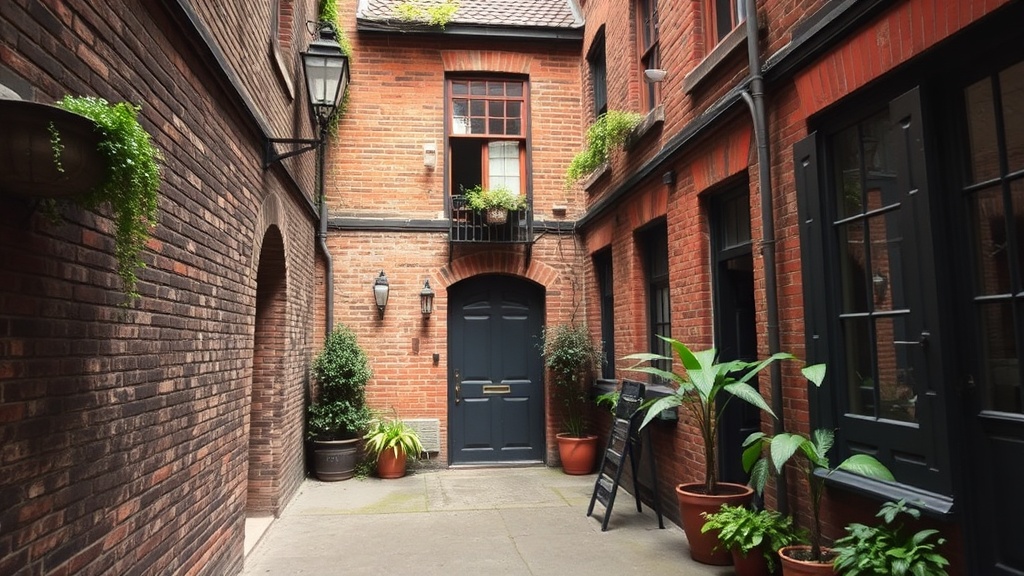
7 Hidden Courtyards and Passages of Old Montreal Locals Love

The Tranquil Courtyard at Château Ramezay
Passage St-François-Xavier: A Historic Walkway
The Secret Garden at Bonsecours Market
Place d'Youville's Hidden Alcoves
The Winding Ruelle des Fortifications
Courtyard Cafes Along Rue Saint-Paul
The Peaceful Corners of Place Jacques-Cartier's Side Streets
What Hidden Courtyards Can You Discover in Old Montreal Beyond the Tourist Routes?
Old Montreal hides dozens of secret passages and enclosed courtyards that most visitors never see — and many locals haven't fully explored. This guide uncovers seven of these tucked-away spaces where you can escape the bustle of rue Saint-Paul, find quiet seating, admire heritage architecture up close, and experience a side of our neighbourhood that doesn't appear on souvenir maps. Whether you're cutting through on your lunch break or seeking a peaceful spot to read, these places reward curiosity.
Where Can Locals Find Quiet Courtyards in Old Montreal During Peak Summer?
The Bonsecours Market courtyard sits behind the silver-domed landmark on rue Saint-Paul Est, accessible through arched stone passages that most pedestrians walk right past. You'll find benches arranged around a central fountain, surrounded by restored 19th-century brickwork that shields the space from street noise.
Here's the thing — this isn't a tourist discovery zone. Local workers from nearby offices eat lunch here daily. The courtyard connects directly to the market's interior, where vendors sell Québécois crafts and products. In summer, the shaded arcade provides relief from the heat bouncing off cobblestones. Worth noting: the courtyard closes earlier than the market itself, typically around 5 PM on weekdays.
The space hosts occasional evening events organized by the Bonsecours Market management — mostly vendor showcases and small acoustic performances. These aren't widely advertised; you'll spot them on notice boards inside the market or through the market's social channels.
Is There a Secret Passage Connecting Rue Saint-Jacques to the Old Port?
Yes — the Ruelle des Fortifications runs between rue Saint-Jacques and de la Commune, cutting through a cluster of heritage buildings that once served the Port of Montreal's administrative functions. The passage follows the approximate line of Montreal's original fortified walls (hence the name), though little visible stonework remains from that era.
What you'll find instead is a cobblestoned walkway flanked by converted warehouse lofts, small law offices, and the occasional art installation. The walls display historical plaques installed by the Quebec Ministry of Culture detailing the port's 18th and 19th-century operations.
The ruelle isn't lit for evening use — it's technically a private lane maintained by the building owners' association, though public access is permitted during business hours. Photographers favor the northern end where late afternoon light filters through gaps between buildings, creating patterns on the worn stones. If you're walking through Old Montreal to catch the riverfront path, this shortcut saves five minutes and offers something prettier than Saint-Laurent Boulevard traffic.
The Grounds of the Château Ramezay
The Château Ramezay on rue Notre-Dame Est contains one of Old Montreal's most overlooked outdoor spaces — the Governor's Garden, accessible through a side gate many assume is private. The museum owns and maintains this walled garden as a recreation of 18th-century colonial plantings.
You don't need a museum ticket to enter the garden during open hours. It operates as a public courtyard with benches, shaded walkways, and period-appropriate heritage plants. School groups use it for educational programming, but between scheduled tours, it's often empty. The high stone walls block virtually all street noise from Notre-Dame.
The catch? Hours fluctuate seasonally, and the garden closes for private events without much notice posted at the entrance. Check the Château Ramezay website before heading over, or peek through the wrought-iron gate on rue Saint-Claude to verify it's open.
Which Courtyards Offer the Best Architecture Photography in Old Montreal?
The interior courtyard of the Édifice Aldred (also known as the Aldred Building) at 507 Place d'Armes provides unmatched Art Deco detail. While the exterior limestone façade draws camera crowds, the inner courtyard — accessible through the building's ground-floor arcade — features original brass fixtures, geometric floor tiling, and a preserved 1930s elevator cage visible through glass panels.
Security guards tolerate photography during business hours if you're discreet and don't obstruct lobby traffic. The space isn't marketed as a tourist stop; it functions as office building common area. That said, the management recognizes architectural interest and generally permits reasonable photography.
Lighting proves challenging — the courtyard receives direct sunlight only during mid-morning hours. For best results, visit around 10 AM when natural light penetrates the central skylight, illuminating the brass elevator fixtures. Tripods aren't permitted without prior arrangement through building management.
| Courtyard | Best Time to Visit | Photography Allowed | Seating Available |
|---|---|---|---|
| Bonsecours Market | 12 PM – 3 PM weekdays | Yes, no restrictions | Benches and low walls |
| Ruelle des Fortifications | 2 PM – 5 PM (lighting) | Yes, public lane | None — standing only |
| Château Ramezay Garden | 10 AM – 12 PM | Yes, no flash indoors | Multiple benches |
| Édifice Aldred | 10 AM (skylight) | Yes, discreetly | Limited lobby seating |
| Place de la Dauversière | Any time | Yes | Benches and café tables |
| Cour Saint-Amable | Weekend mornings | Yes | Private terrace (residents) |
| Passage du Chien d'Or | After 9 AM | Yes | None |
Place de la Dauversière — The Locals' Shortcut
This triangular plaza tucked between rue Saint-Paul and rue Saint-Sulpice serves as a pedestrian cut-through that few tourists notice. The space contains public benches, a central fountain (non-operational during winter), and direct access to the Saint-Sulpice Seminary's exterior wall — the oldest standing building in Montreal, dating to 1687.
Local residents use Place de la Dauversière as a meeting point before walking to the Old Port or Place-d'Armes metro. The adjacent Café Saint-Henri operates a small outdoor seating area spilling into the plaza during summer months — one of the rare spots in Old Montreal where you can sit outside without fighting tourist restaurant crowds.
The plaza's name commemorates Jérôme le Royer de la Dauversière, one of Montreal's founders. A modest bronze plaque explains this history, though weathering has made the text difficult to read. You'll find cleaner historical context at the nearby Pointe-à-Callière museum.
Are There Residential Courtyards in Old Montreal Open to the Public?
Cour Saint-Amable, accessible from rue Saint-Amable between rue Saint-Paul and de la Commune, blurs the line between private residential space and public passage. The co-op building surrounding this courtyard maintains an open-gate policy during daylight hours, welcoming pedestrians to cut through while requesting respect for resident privacy.
The courtyard features potted trees, resident-maintained flower beds, and wrought-iron seating installed by the building's 1980s conversion from warehouse to residential. You're welcome to pause on the benches — many locals do — but extended lounging, picnicking, or group gatherings aren't appropriate here. It's someone's home entrance, after all.
The building's ground floor contains artist studios that occasionally open for portes ouvertes events. During these weekends, the courtyard becomes a social space where residents and visitors mingle. Otherwise, it's a quiet spot to pause during an Old Montreal walk, sheltered from wind by four storeys of brick on all sides.
Passage du Chien d'Or — The Hidden Connector
Most people photographing the golden dog statue on Notre-Dame don't realize a narrow passage runs directly behind it, connecting the basilica square to a small rear courtyard and ultimately to rue Saint-Sulpice. The passage measures barely two metres across — easy to miss if you're not looking for it.
The courtyard at the passage's midpoint contains the rear entrances of several law offices and a notary's practice. It offers no seating, no amenities, and no particular aesthetic distinction beyond the satisfaction of knowing you've found something hidden. That's enough for some explorers.
The name "Chien d'Or" refers to the golden-haired dog sculpture mounted on the former Montreal courthouse building — a replica of a 19th-century figure that became a local legend. The passage itself has no official designation; "Passage du Chien d'Or" is simply what residents call it. You won't find it labeled on Google Maps.
How Do You Access the Seminary Gardens Behind Notre-Dame Basilica?
You don't — not fully. The Sulpician Seminary maintains private gardens on its property that aren't open to the public. However, a narrow walkway along the seminary's eastern wall (accessed from rue Saint-Sulpice near the chapel entrance) provides views into these gardens through iron railings.
The walkway itself qualifies as a hidden passage — stone-paved, tree-shaded, and unknown to most visitors queued for basilica tours. Local dog walkers and early-morning joggers use it as a quiet route between Saint-Paul and Notre-Dame. The seminary's maintenance staff tend the visible garden beds meticulously; the glimpses through the fence show formal plantings, heritage trees, and stone statuary.
Occasionally — typically during Journées de la culture in late September — the seminary opens portions of these gardens for guided tours. These limited-access events draw lines, and spots fill quickly. For locals, the year-round view through the fence suffices.
Practical Notes for Exploring
Old Montreal's hidden spaces share certain characteristics that reward prepared visitors. Most lack public restrooms — plan accordingly. Winter maintenance varies; some courtyards (Bonsecours, Place de la Dauversière) receive regular snow clearing, while others (the seminary walkway, Cour Saint-Amable) don't, making passage difficult or impossible from December through March.
Summer brings construction and filming permits that occasionally close these spaces without advance notice. The city issues permits for commercial photography in heritage locations frequently; if you encounter locked gates or "tournage en cours" signs, that's usually the reason.
Here's the thing about these places — they aren't curated experiences. No visitor center staff, no audio guides, no gift shops. What you get instead is authentic Old Montreal: worn stone, unexpected quiet, and the feeling of discovering something that belongs to our community. That authenticity is increasingly rare in a district where tourism dominates the streetscape.
Respecting These Spaces
These courtyards and passages survive because building owners, co-op boards, and heritage authorities tolerate public access. That tolerance has limits. Loud conversations, alcohol consumption, or lingering after posted hours risks restricted access for everyone. The Ruelle des Fortifications already closes earlier than it did five years ago due to misuse complaints.
If you're photographing residents or workers in these spaces, ask permission — common courtesy that maintains goodwill. The same applies to commercial photography: what building security might ignore from a tourist with a phone becomes an issue when professional equipment appears.
Old Montreal's hidden network of courtyards and passages represents the neighbourhood's original urban fabric — the spaces that existed before tourism, before Instagram, before the silver domes and cobblestones became shorthand for Montreal itself. Exploring them connects you to that longer history. Just remember: for the people who live and work here, these aren't discoveries. They're simply the neighbourhood.