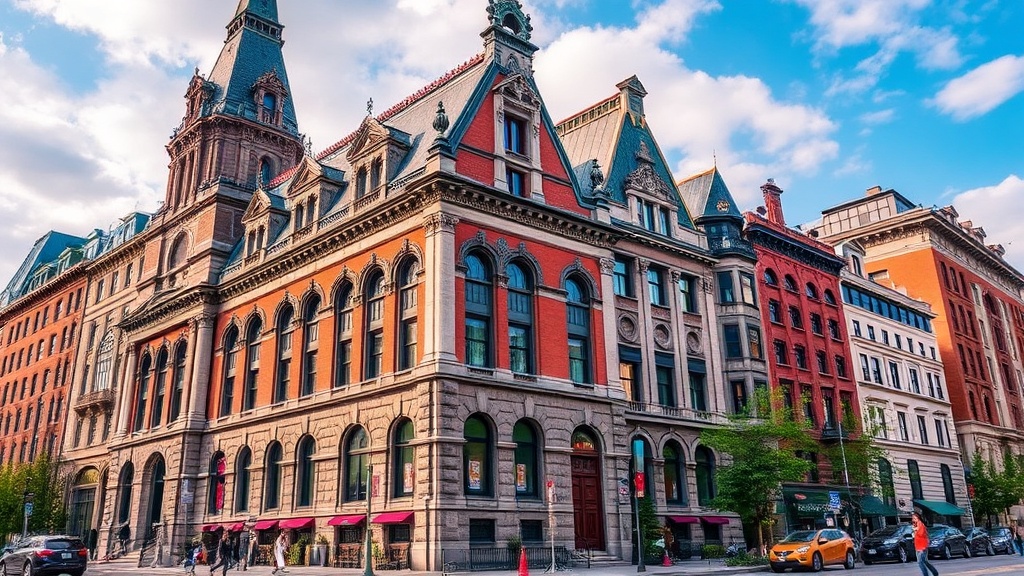
Discover Old Montreal: A Complete Guide to Historic Charm and Hidden Gems

What Makes Old Montreal's Historic Architecture So Special?
Old Montreal holds one of North America's most concentrated collections of 17th to 19th-century architecture. The neighbourhood's cobblestone streets and stone buildings tell the story of Montreal's founding, with structures that have witnessed nearly four centuries of city life.
The area known as Vieux-Montréal (as locals call it) sits on the original site where French settlers established Fort Ville-Marie in 1642. Walking these streets means tracing the same paths where merchants, artisans, and residents built the foundation of modern Montreal. The architecture here isn't museum pieces behind glass — these are working buildings where people live, work, and gather.
Notre-Dame Basilica stands as the crown jewel. Built between 1824 and 1829, its Gothic Revival interior features blue vaults studded with gold stars that stop first-time visitors in their tracks. (Seriously — the ceiling alone justifies the modest entrance fee.) The basilica sits on Place d'Armes, a public square that's been the heart of Old Montreal since the 17th century.
Around the corner on Saint-Jacques Street, the former banks and financial houses display elaborate facades from Montreal's industrial heyday. The Bonsecours Market — visible from the waterfront — served as Montreal's main public market from 1847. Today it houses local artisans and boutiques. Here's the thing: these buildings matter to daily life in Old Montreal. They're not just pretty backdrops — they house the pharmacies, cafes, and apartments residents use every day.
The catch? Winter takes its toll. Stone facades need constant attention, and heritage preservation rules mean renovations move slowly. That said, the neighbourhood's commitment to maintaining its character keeps property values stable and preserves the unique atmosphere that makes living here unlike anywhere else in Canada.
Where Do Locals Actually Go in Old Montreal?
Residents gravitate toward specific spots that tourists often miss — places that serve the community rather than visitors passing through.
Marché des Éclusiers on the Old Port boardwalk operates from May through October. Local farmers, bakers, and producers sell directly to neighbourhood residents here. It's practical shopping disguised as a pleasant weekend stroll. The market sits near the Lachine Canal entrance, making it a natural stop for cyclists and runners from the area.
For everyday needs, locals head to Marché Vieux-Montréal on Saint-Jacques Street — a compact grocery that stocks fresh produce, Quebec cheeses, and prepared foods. The prices aren't tourist-inflated, and the staff knows regular customers by name.
Worth noting: Saint-Paul Street West divides into distinct sections. East of Saint-Jean Street draws heavy tourist traffic with souvenir shops and galleries. West of Saint-Jean becomes quieter, more residential, with small services residents actually need — dry cleaners, hardware stores, independent bookshops. Living in Old Montreal means knowing which blocks serve which purposes.
The Pointe-à-Callière Museum sits atop actual archaeological ruins — the original foundations of Montreal. Residents often buy annual memberships because temporary exhibitions rotate regularly and the permanent collection rewards repeat visits. Plus, the museum runs walking tours that reveal layers of neighbourhood history invisible to casual observation.
Local families frequent Place d'Youville — a public square with a skating rink in winter and open space the rest of the year. The attached cultural centre hosts community programming, and the surrounding cafes serve as unofficial meeting spots for parents, remote workers, and retirees from the nearby condos.
What Should You Know About Living in Old Montreal?
Old Montreal functions as both residential neighbourhood and commercial district, which creates a specific lifestyle with distinct advantages and compromises.
Housing options break down into roughly three categories:
| Property Type | Typical Features | Who It Suits |
|---|---|---|
| Heritage Lofts | Exposed brick, high ceilings, original wood beams, limited parking | Professionals, empty nesters, remote workers who value character |
| Modern Condos | New construction, amenities (gym, rooftop), underground parking, smaller square footage | Young professionals, investors, part-time residents |
| Converted Commercial | Mixed-use zoning, ground-floor potential, renovation required | Entrepreneurs, artists, multi-generational families |
The lack of large grocery stores frustrates some newcomers. The neighbourhood relies on small markets, specialty shops, and delivery services. Most residents adapt quickly — the IGA on Notre-Dame Street (technically just outside Old Montreal proper) serves as the main supermarket for weekly shopping. Many locals also subscribe to CSA farm boxes delivered to neighbourhood pickup points.
Parking presents ongoing challenges. Street parking requires resident permits and patience. Most buildings constructed after 1990 include underground parking, but heritage conversions rarely do. Many residents simply don't own cars — the neighbourhood's walkability and STM metro access (Place-d'Armes and Champ-de-Mars stations) make vehicle ownership optional rather than necessary.
Here's the thing about noise: Old Montreal never fully sleeps. Restaurants close late. Delivery trucks start early. Street festivals and events block traffic regularly. Light sleepers should prioritize units facing courtyards over street-facing rooms. That said, the energy keeps the area feeling alive rather than deserted.
Community Services and Local Governance
Old Montreal falls under the Ville-Marie borough, which manages local services differently than other Montreal neighbourhoods. Street cleaning, snow removal, and maintenance receive priority attention given the area's visibility — but infrastructure dates back centuries, creating ongoing headaches.
The Old Montreal Residents' Association (Association des résidents du Vieux-Montréal) advocates for local interests when developers propose new projects or when city planning affects quality of life. Membership costs $25 annually and includes a newsletter tracking neighbourhood changes — new businesses, construction projects, zoning changes. For anyone considering a move here, attending one of their quarterly meetings reveals the actual concerns of people who live here.
The catch? Tourism pressure constantly threatens to tip the balance away from residential needs. Short-term rental regulations have tightened in recent years, but enforcement remains inconsistent. Prospective buyers should verify whether units they consider have proper residential zoning and whether condo associations restrict short-term sublets.
How Does Old Montreal Handle the Seasons?
Four distinct seasons shape daily routines here more dramatically than in many Canadian cities — and the neighbourhood adapts rather than retreating indoors.
Winter transforms the Old Port skating rink into one of Montreal's most scenic outdoor ice surfaces. The city maintains it meticulously, and residents skate with the basilica visible in the background. The Notre-Dame-de-Bon-Secours Chapel — known locally as the Sailors' Church — offers warmth and quiet reflection during cold months. Its tower provides panoramic views worth the climb even in January.
Spring hits dramatically when terraces open. Place Jacques-Cartier — the pedestrian street running from City Hall to the Old Port — fills with outdoor seating. Locals know to arrive early on first warm weekends to claim tables before the crowds. The annual Montréal en Lumière festival extends winter programming with light installations and outdoor activities that keep residents engaged through March.
Summer means the Old Port becomes an extension of everyone's backyard. The waterfront promenade hosts cyclists, rollerbladers, and pedestrians from dawn until well after dark. Clock Tower Beach — yes, an actual sandy beach along the St. Lawrence — opens for swimming and lounging. Residents receive discounted seasonal passes.
Fall brings comfortable walking weather and cultural programming. The Montreal International Jazz Festival and Francofolies technically occur in summer, but autumn offers more intimate neighbourhood events — gallery openings, wine tastings at local cellars, harvest markets on the cobblestone streets.
That said, Old Montreal's weather reality hits hard during ice storms and heavy snowfalls. Cobblestones become treacherous. Heritage buildings draft cold air. Heating costs run higher than in modern construction. The neighbourhood's beauty comes with practical trade-offs that residents accept as part of the package.
Getting Around Without a Car
The Bixi bike-share system maintains multiple stations throughout Old Montreal, making short trips to adjacent neighbourhoods simple. The Lachine Canal bike path runs along the neighbourhood's southern edge, connecting to Atwater Market and points west. In summer, cycling becomes the default transportation mode for many residents.
The 747 bus runs express service between Old Montreal and Trudeau Airport — useful for residents, not just tourists. Two metro stations (Place-d'Armes and Champ-de-Mars) connect to the wider Montreal network. Most daily needs fall within walking distance, though.
Worth noting: Old Montreal's cobblestone streets and pedestrian priority make cycling within the neighbourhood itself tricky. Most riders walk bikes through the historic core, then mount up once they reach paved roads. It's a small adjustment that becomes automatic after a few weeks of residency.
Why Do People Actually Choose Old Montreal?
People settle here for specific, concrete reasons — not vague romance about historic charm.
The walkability scores among Montreal's highest. Daily errands require no vehicle. Restaurants, pharmacies, banks, medical clinics, and professional services cluster within a few blocks. For professionals working downtown, walking commutes replace stressful transit rides.
The architectural environment genuinely affects quality of life. Natural light floods south-facing units in heritage buildings. Ceilings soar fourteen feet or higher. Masonry construction blocks sound between units better than drywall and studs. These aren't aesthetic preferences — they're tangible living conditions.
Community density creates unexpected connections. Running into neighbours at the market, the cafe, the pharmacy happens constantly. In a city where many neighbourhoods feel anonymous, Old Montreal maintains small-town recognition among residents. The local Facebook groups and community message boards stay active with recommendations, warnings, and conversations.
The catch? You'll pay for these advantages. Square footage costs more here than in most Montreal neighbourhoods. Parking adds expense. Tourist-season crowds invade personal space from June through September. Some residents leave for August entirely, subletting their units and escaping to cottages.
Here's the thing: Old Montreal demands specific lifestyle adjustments. You learn which streets to avoid during Formula 1 weekend. You memorize the construction detour routes. You develop opinions about which heritage restoration projects succeed and which miss the mark. These small expertise markers signal genuine belonging — the difference between living here and simply occupying space.
For those who make the commitment, Old Montreal offers an urban experience unavailable elsewhere in Canada. The combination of genuine history, active street life, and functional residential amenities creates a neighbourhood that rewards patience with depth. You don't just visit Old Montreal — you learn its patterns, earn your routines, and gradually accumulate the knowledge that transforms a location into a home.