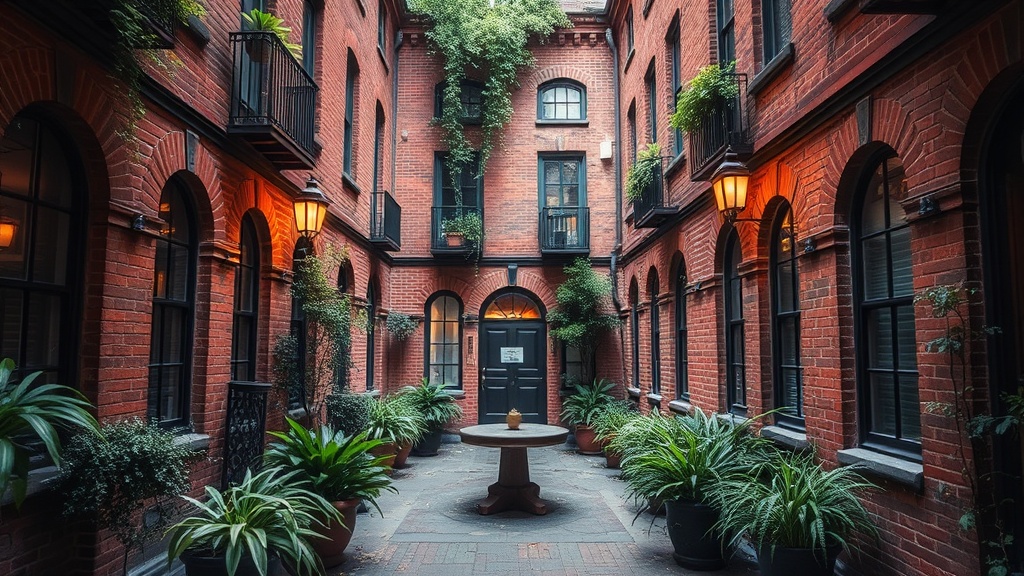
Finding the Best Hidden Courtyards in Old Montreal

A tourist stands on the corner of Saint-Paul and Notre-Dame, squinting at a map while a delivery truck blocks the sidewalk. They want a quiet moment, but all they hear is the screech of brakes and the chatter of a tour group. This is the reality of Old Montreal if you only stick to the main arteries. This guide covers how to find the secluded courtyards and hidden stone alcoves tucked behind the heavy wooden doors of our historic district. Knowing where to look transforms a loud, hectic afternoon into a peaceful retreat.
Finding these spaces isn't about luck; it's about knowing which alleys lead to dead ends and which ones open into private gardens. Most people walk right past the most beautiful spots because they assume the heavy iron gates are strictly off-limits. In reality, many of these spaces are semi-public or part of commercial establishments that welcome a quiet coffee break.
Where Can You Find Hidden Courtyards in Old Montreal?
You can find the best hidden courtyards by looking for narrow passageways (ruelles) and the side entrances of heritage buildings near Place d'Arme and Rue Saint-Paul. Most of these spots are tucked away behind large stone facades that look entirely closed off from the street.
The first place to look is the network of ruelles. These aren't just alleys for trash bins; they are the veins of the neighborhood. If you see a small gap between two buildings, peek in. You'll often find a small stone courtyard or a tiny patch of greenery that feels a thousand miles away from the traffic on René-Levasseur.
Another tip: look for the "inner" entrances of hotels and high-end boutiques. Many of the luxury properties around the Old Montreal district feature interior courtyards that are technically open to guests but perfectly accessible for a quiet moment if you're respectful. It's a common way to escape the midday heat or a sudden downpour.
Here is a quick breakdown of the three most common types of hidden spaces you'll encounter:
- The Commercial Courtyard: These are often attached to restaurants or cafes. They usually feature outdoor seating and are the easiest to access if you buy a drink.
- The Residential Alley: These are strictly private, but many are visible from the street. They offer great photo opportunities without actually entering private property.
- The Hotel Atrium: Large, grand, and often quite expensive-looking, these spaces offer a sense of luxury and silence.
Don't be afraid to wander. The best spots are rarely marked with big, neon signs. Sometimes, you just have to follow a scent—like fresh espresso or blooming jasmine—to find your way.
What Are the Best Courtyards for a Quiet Coffee?
The best courtyards for a quiet coffee are the semi-public spaces located behind the cafes on Rue Saint-Paul and Rue de la Commune. These areas provide a buffer from the street noise while still being easily accessible.
If you want to sit down with a book, look for the small alcoves near the historic buildings on the eastern edge of the district. There is a certain charm to sitting on a stone bench while the sun hits the old masonry. It's a much better vibe than sitting on a crowded sidewalk near a construction site.
I personally suggest checking the side entrances of the smaller coffee shops rather than the big chains. The small, independent spots often have a "back way" that leads to a tiny patio. It's a local secret—one that keeps the atmosphere intimate.
| Type of Space | Best For | Vibe |
|---|---|---|
| Cafe Side-Patio | Quick caffeine hit | Casual & Lively |
| Hotel Garden | Reading a book | Quiet & Sophisticated |
| Public Alleyway | Photography | Rustic & Secluded |
One thing to keep in mind—if you're sitting in a cafe courtyard, don't stay for three hours with a single small espresso. These spaces are small. If a crowd starts to form, be mindful of the people waiting for a table. It's just good etiquette.
A Note on the Weather
Montreal weather is famously unpredictable. One minute it's sunny, the next it's a torrential downpour. If you're hunting for these spots, always carry a compact umbrella. Many of the deeper courtyards offer some shelter, but the wind can still whip around the corners of the stone buildings. If you're wearing a light jacket, like a Patagonia Torrentshell, you'll be much more comfortable while exploring the narrower alleys.
How Do I Know if a Courtyard is Private?
You can tell if a courtyard is private by looking for "No Trespassing" signs, locked gates, or residential doorbells. If the space is clearly part of a business, like a restaurant or a boutique, it is generally considered public-access during business hours.
It's a fine line. You'll often see a heavy iron gate that is slightly ajar. This is usually a sign that the space is part of a commercial establishment. However, if you see a keypad or a formal intercom system without any signage, stay out. That's a residential entrance. Respecting these boundaries is what keeps the neighborhood friendly for everyone.
A good rule of thumb? If you see people sitting there, you're probably fine. If the space is completely empty and looks strictly residential, keep moving. You don't want to end up in an awkward conversation with a local resident who just wants to enjoy their afternoon in peace.
Sometimes, the most beautiful spaces are the ones that aren't "allowed" to be public. There's a certain magic in finding a view through a gap in a fence or a doorway. Just be a silent observer. Don't linger too long in a space that clearly belongs to a private home. It's better to enjoy the view from the street than to be asked to leave.
If you're looking for more official information on the preservation of these historic areas, you can check the Quebec heritage resources. The city takes these structures very seriously, which is why they remain so well-preserved.
Pro-Tips for the Urban Explorer
- Use Google Maps Street View: Before you head out, "walk" the streets virtually. You might spot a courtyard from the digital view that you can find in person.
- Check the Time: Many of the best spots are only "open" when the businesses nearby are open. Don't bother looking for a cafe courtyard at 8:00 PM.
- Watch Your Feet: The cobblestones in Old Montreal are beautiful, but they are uneven. If you're exploring narrow alleys, wear sturdy shoes.
- Listen: Often, you can hear the change in acoustics before you see the change in scenery. A sudden drop in volume usually means you've found a pocket of quiet.
The beauty of Old Montreal isn't just in the famous landmarks like the Notre-Dame Basilica. It's in the small, unrecorded moments. It's in the way the light hits a brick wall in a hidden alleyway at 3:00 PM in July. It's in the silence that exists just ten feet away from a bustling street. Finding these spots requires a bit of patience and a lot of curiosity. Take your time. The city isn't going anywhere.
When you do find that perfect spot, take a second to actually be there. Don't just snap a photo for social media and move on. Sit. Breathe. The architecture here has survived centuries of change, and it deserves a moment of your undivided attention.
Steps
- 1
Look for Open Gateways
- 2
Follow the Narrow Alleys
- 3
Check Local Café Perimeters